Hello bookworms!
Welcome to today's stop on the Seafarer's Kiss blog tour! This f/f retelling of the Little Mermaid is fresh, amazing and a must read! Wonderfully diverse and beautifully written, I can't recommend the book enough! Today we have it's lovely author Julia Ember over at the blog, sharing some tips for building a believable SFF world, as part of the blog tour!

P. S - I shared my review on GR today, do make sure to check it out here!
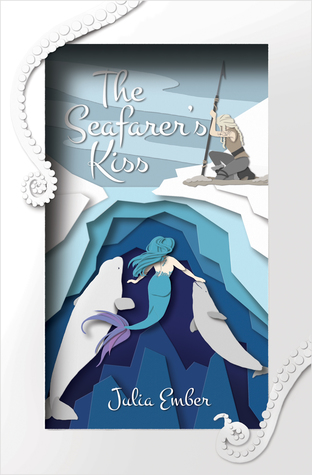
Title : The Seafarer's Kiss
Author: Julia Ember
Publisher : Interlude Press/Duet Books
Release Date : May 4th 2017
Synopsis :
Having long-wondered what lives beyond the ice shelf,
nineteen-year-old mermaid Ersel learns of the life she wants when she rescues
and befriends Ragna, a shield-maiden stranded on the mermen’s glacier. But when
Ersel’s childhood friend and suitor catches them together, he gives Ersel a
choice: say goodbye to Ragna or face justice at the hands of the glacier’s
brutal king.
Determined to forge a different fate, Ersel seeks help from
Loki. But such deals are never as one expects, and the outcome sees her exiled
from the only home and protection she’s known. To save herself from perishing
in the barren, underwater wasteland and be reunited with the human she’s come
to love, Ersel must try to outsmart the God of Lies.
Tips for Building a Believable SFF World
World-building: simultaneously the
best and the worst part of writing SFF. Most SFF writers write SFF for the
places they can create, the magic they can weave and the monsters they can set
lose. Plus, you get to invent your own rules and physics doesn’t necessarily
apply.
When I’ve
gone on school visits or talked to aspiring writers, I get a lot of questions
about how I build worlds in my books. In this post, I’m going to share a couple
of tips!
Eliminate the info-dumps!
Most SFF
writers know too much about their world rather than not enough. The desire to
show-off every minute aspect of the world and its history often makes writers
drop lengthy paragraphs of history throughout their introductory chapters.
Doing this both bores the crap out of your reader and interrupts the narrative
flow of your story.
It’s hard
to connect with a character if their story is constantly being interrupted by
three pages of their grandmother’s genealogy or the history of a space battle
that happened before they were born. Your readers need details, but they need
them spaced out. Give your reader snippets of information as they are required
by the story.
It’s the small details that matter.
In my
opinion, the best way to build a world that feels real is to focus on the
mundane details. Instead of describing sweeping landscapes and battles that
don’t affect your character, focus on what she’s eating, what’s wearing, where
she’s sleeping. These little details often get overlooked, but they are the
things that really immerse readers into a new world.
Sight is only one of the senses.
I used to
intern for a literary agency, and during that time, I read quite a large number
of SFF manuscripts. Something that struck me then, and I’ve tried to be better
about it in my own writing, is how little attention many writers give to senses
outside of sight. Describing what your character touches, tastes and smells is
essential to add texture to your world-building. What does the air smell like
on your space station? If you’re making up new fruits, what do they taste like?
It’s not enough to say: Karinda bit into a daggafruit. We need to know what it
is!
Don’t break your own rules.
Nothing
drives me out of an SFF story faster than a writer who breaks their own rules.
When you’re creating a world, you get to set the parameters, but once they’re
set, your reader will expect you to follow them. If you setup a world where
your character needs to speak a spell to use their magic, but then on page 192,
your character can suddenly do silent incantations, your reader will be
confused and will no longer trust your writing. Make sure you know what your
own parameters are!
About the Author

Julia Ember is a polyamorous, bisexual
writer and native of Chicago who now resides in Edinburgh, Scotland. The
Seafarer’s Kiss is her second novel and was influenced by her postgraduate work
in medieval literature at The University of St. Andrews. Her first novel,
Unicorn Tracks was published by Harmony Ink Press.
Interlude Press | Amazon | Barnes & Noble | Target | iTunes | Google Books |
Giveaway
Grand Prize $25 IP Gift Card + Multi-format eBook of Hold // Five winners receive Storm Season eBook

No comments:
Post a Comment